

News
Following Changes at the Solid/Liquid Interface for Large Microplastic Particles by Streaming Potential
21.09.2025
Matthias B. Engelhardt, Daniel Wagner, Mohsen Zarebanadkouki, Nora Meides, Christian Schulbert, Martin G. J. Löder, Nicolas Helfricht, Seema Agarwal, Andrea Carminati, Peter Strohriegl, Jürgen Senker, Christian Laforsch, Georg Papastavrou
Chemistry Methods, 2025, https://doi.org/10.1002/cmtd.202500102
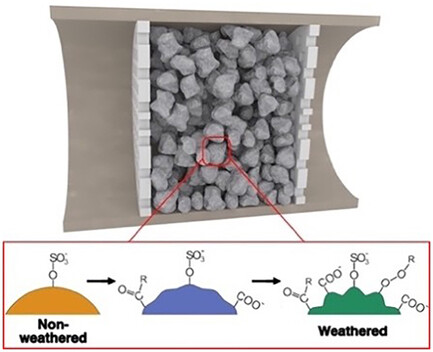

The electrolyte/solid interface is ubiquitous in nature and for many applications. In particular, the double-layer properties are essential for predicting adsorption and transport behavior. While for small colloidal particles, electrophoretic mobility has developed into a routine technique, there is currently a lack of analogously established techniques for particles with diameters larger than 10 microns. Such particles are often encountered in natural soils, industrial formulations, and as contaminants in the form of microplastics. Herein, a systematic method development using the streaming potential technique of particle plugs composed of large particles is presented. This approach revives an analytical method that was first introduced nearly 75 years ago, which has rarely been used for particulate systems. Comparing the zeta-potential versus pH of polystyrene particles with varying surface functionalization demonstrated that streaming potential measurements can distinguish these surface groups. In agreement with theoretical predictions, no dependence on the particle dimensions and shape is observed. Moreover, the particle arrangement within the particle plugs has been characterized by X-ray microtomography. The viability of this technique is tested by monitoring the artificial weathering of artificially fragmented microplastic particles of non-spherical shape. This technique opens new possibilities for characterizing the interfacial properties of environmentally relevant microplastics.